30. Dorset Gardens Pricing: How Indicative Launch Numbers Can Be Used (No Guarantees)
When a new condo launches, “price” is often treated like a single number. In practice, it is a moving target shaped by approvals, demand signals, unit selection, marketing strategy, and the realities of selling a large inventory in a tight window.
That is why indicative launch numbers for Dorset Gardens can still be useful, even if you treat them correctly. The key is to use them as decision input, not as promises. Below, I’ll lay out a practical way to interpret Dorset Gardens pricing information that is presented for previews, brochures, and price list registration, and how to translate those indicative figures into something you can act on. This approach matters most for buyers who are serious about comparing other options in District 8, or who need to plan financing and timing around a new condo schedule.
What Dorset Gardens is, and why “indicative pricing” shows up early
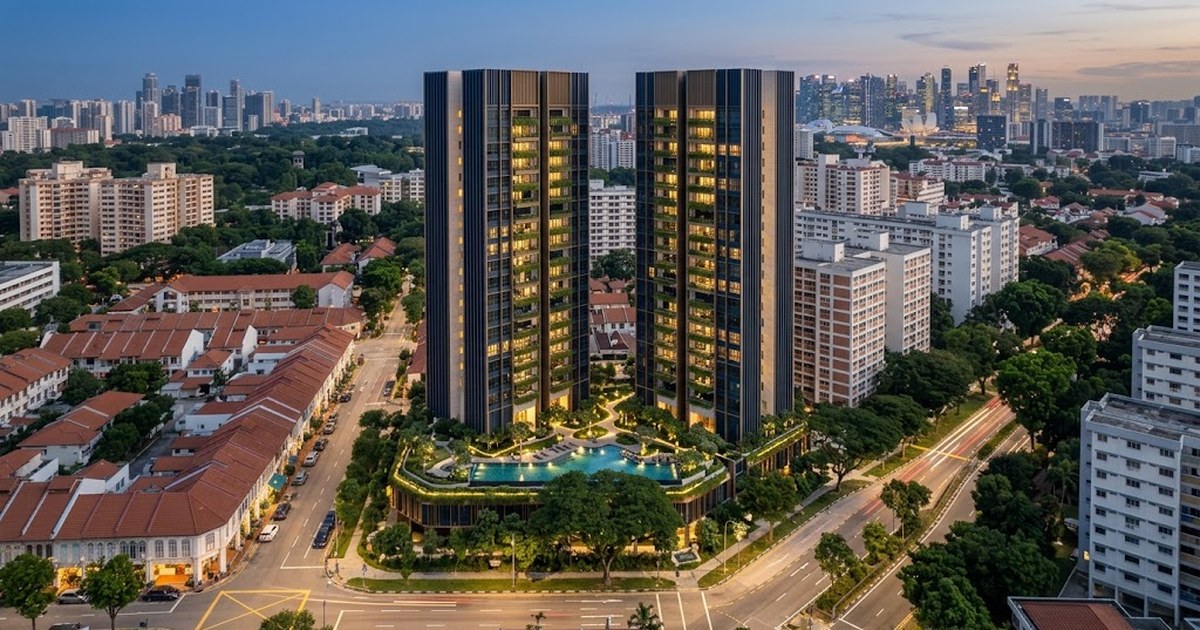
Dorset Gardens is the marketing name used for an upcoming new condominium project on Dorset Road in Singapore’s District 8, near Farrer Park MRT. Dorset Gardens condo The site is part of a government land sale award to a consortium comprising UOL, Singapore Land Group (SingLand), and Kheng Leong Company. One account states the consortium shareholding as UOL 60%, SingLand 20%, and Kheng Leong 20%.
From a project scale perspective, one property description says Dorset Gardens is planned as a 99-year leasehold condominium with about 428 homes across two 27-storey towers. Another set of details describes the site as roughly 10,399 sq m, and notes proximity to Farrer Park MRT Station and nearby schools such as St Joseph’s Institution.
These facts explain why “indicative” numbers tend to appear well before there is a final, fully locked pricing list. For a project of this size and profile, early marketing materials often focus on generating demand and educating buyers on a likely pricing range. Showflat appointments, brochure downloads, and price list registration pages frequently act as the pipeline where sales teams can sense buyer readiness and fine-tune their launch strategy.
In other words, if you are looking at Dorset Gardens new launch pricing signals, you are usually not seeing final outcomes. You are seeing an early forecast shaped by limited information.
Start with what is confirmed, not what is guessed
The temptation with any Dorset Gardens condo pricing discussion is to jump straight to “how much” and forget “based on what.” A more grounded approach begins with verified, defensible context.
Here are the elements that are supported by the available project information:
- The marketing name is Dorset Gardens, located on Dorset Road in District 8 near Farrer Park MRT.
- The land was acquired via a government land sale awarded in October 2025 for S$524.3 million, quoted at S$1,338 psf ppr.
- The consortium comprises UOL, SingLand, and Kheng Leong Company, with one stated JV shareholding split of UOL 60%, SingLand 20%, Kheng Leong 20%.
- One project description indicates it is a 99-year leasehold condominium with about 428 homes in two 27-storey towers.
- Another set of details references a site size of roughly 10,399 sq m and emphasizes that it is next to Farrer Park MRT and near schools including St Joseph’s Institution.
What you do not have, from the verified material, is an officially confirmed final pricing schedule with guaranteed minimums and maximums. The marketing pages can indicate “direct developer price,” “price list” availability, and booking mechanisms like Dorset Gardens brochure downloads, Dorset Gardens book appointment, and Dorset Gardens view showflat style flows. But you should treat those as commercial readiness, not a binding pricing commitment.
That distinction matters because it affects how you use indicative numbers in your own calculations.
How indicative launch numbers are typically “engineered”
Even without inventing any unit details, there are patterns in how launch pricing signals are usually presented during the early phase of a new condo marketing push.
Indicative numbers often function as three things at once:
First, they set expectations. Buyers need a reference point fast, especially if competing developments are also in market.
Second, they test the market. If the early interest profile skews strongly toward certain unit sizes or certain price bands, sales teams can adjust how aggressively they want to price the next wave.
Third, they give internal structure to the sales process. Launching a project with about 428 homes across two towers is not a one-switch operation. There are phases, selection mechanics, and allocation considerations that can shift what buyers actually manage to book on day one versus later.
So when you see Dorset Gardens pricing previews, the most important question is not “is this the final number.” It is “what is the logic behind this indicative figure, and how much variation should I plan for.”

A practical way to use Dorset Gardens pricing signals, without betting the house
If you only remember one principle, make it this: indicative numbers are best used to estimate a likely range, then plan your decisions around the top end of that range you are willing to pay.
Step 1: Convert “psf” into a budget ceiling you can defend
Launch communications often present pricing in psf terms (or prices that can be translated into psf). Your budget should not be keyed to a single psf line item. Instead, convert what you are seeing into an all-in purchase figure that includes the realities buyers actually deal with, such as timing of payment milestones and your cashflow needs.
Because the verified information does not provide a confirmed psf schedule, you should not anchor to a single indicative psf and assume you can secure it. Use indicative numbers as a “center of gravity,” then set your budget ceiling slightly above it.
For example, if the preview suggests a certain psf band, you can treat that as a middle scenario and plan for the possibility that the unit types you prefer land closer to the higher end of what was signaled. This is especially relevant when you are trying to secure a specific orientation, higher floor, or a unit type that tends to be more in demand.
Step 2: Price the difference between “what you want” and “what you can get”
In most launches, the indicative pricing information can only be fully accurate for the subset of units that match the assumptions behind the marketing narrative. In a large project like Dorset Gardens, the demand profile usually concentrates around certain unit sizes and layouts. Even if two units appear similar on paper, buyers often treat them as meaningfully different.
So when you compare Dorset Gardens condo pricing to another project, avoid comparing “average indicative psf” to the “best-case unit you want.” Compare ranges to ranges. If a project is priced around the same ballpark, the winner is often the one where the buyer is least exposed to unpleasant selection trade-offs.
This is where lived buying experience matters: many buyers lose money or confidence not because the project becomes “expensive,” but because they end up paying a premium to secure the unit they wanted at the time they had the least flexibility.
Step 3: Use the land acquisition context as a reality check, not as a formula
The government land sale bid at S$524.3 million and the quoted S$1,338 psf ppr can be a useful sanity check when you are trying to understand whether indicative pricing seems wildly disconnected from land cost reality.
But it is not a direct pricing guarantee. Between land cost and retail pricing there are construction costs, development overheads, financing costs, marketing strategy, and sales phasing. Even the difference between a conservative marketing pace and a more aggressive launch plan can shift what buyers see.
Still, the land cost headline can help you avoid one common mistake: dismissing the indicative figure as “too high” without understanding that it may reflect the development economics already embedded in the land acquisition price.
What to watch in Dorset Gardens pricing pages and preview flows
Because the most reliable verified material here is that Dorset Gardens marketing pages exist and facilitate brochure downloads, price list registration, and showflat appointment bookings, your job as a buyer is to treat these signals like process milestones.
Here are a few practical things you can do as you move from browsing to appointment to selection:
- When you register for the price list or request it through a brochure flow, pay attention to whether the range you saw in early promotional material tightens or shifts. Tightening often indicates more clarity around demand targeting.
- During a showflat viewing, ask how indicative numbers translate into specific unit choices rather than only “the project average.” If the sales team can’t speak concretely about unit bands you care about, that’s a warning sign that you might be dealing with placeholder or broad-brush figures.
- If you are comparing Dorset Gardens new launch timing against other projects, use your indicative pricing signals to estimate an “expected launch affordability window,” then lock your own decision dates around that window. The goal is to avoid being forced into last-minute selection under uncertainty.
This approach turns Dorset Gardens project details from a static marketing story into a dynamic decision process.
Trade-offs are the real price, not just psf
People talk about Dorset Gardens pricing as if it is only about the number of dollars per square foot. In real purchases, the trade-offs often cost more than the delta between two nearby indicative bands.
A few trade-offs worth thinking through, based on how launches typically behave:
Unit availability risk
If the most attractive unit band sells faster, the “real” effective price for a late buyer can be higher than the first tranche indicative pricing suggests. Even if your target psf was the headline, your booking can land in the next band if your preferred choices are gone.
Selection risk versus timeline risk
Waiting can mean better pricing clarity, but it can also mean losing access to certain stacks or layouts. For a project with about 428 homes across two towers, selection pressure can still exist, particularly if the market is warm.
Financing certainty
Indicative pricing can lure you into thinking your budget is safe. If you plan financing around a narrow number, you risk stress if the unit you end up with falls above your expected range. Treat the indicative figures as a planning reference, not a lock.
How developers and buyers both use “early numbers”
It helps to understand that indicative pricing serves the developer’s sales process as much as it serves the buyer’s planning.
For a Dorset Gardens new condo launch, early indicative numbers can drive two outcomes: they filter serious buyers and they create momentum for sales phasing. But the developer also benefits from not fully overcommitting before confirming the market response.
From the buyer’s side, early pricing signals are valuable because they reduce guesswork. You start to map out what is possible, and you can decide whether to proceed with an appointment, whether to compare other District 8 or nearby options, or whether to wait for a later release wave.
The “no guarantees” part is not cynicism, it is buyer discipline. Your job is to decide how much uncertainty you can comfortably carry.
A small checklist to turn indicative pricing into action (no overthinking)
You only need a short mental checklist. Use it consistently so your decision does not drift based on emotions from one viewing or one salesperson conversation.
- What indicative psf or price range am I seeing, and is it tied to specific unit bands or only generic project messaging?
- If my preferred unit choice ends up in the higher end of the range, is my financing and cashflow still safe?
- Am I comparing Dorset Gardens pricing to other projects using comparable unit types and not just “average headline” numbers?
- Do I have a decision deadline, so I am not reacting to uncertainty at the last minute?
If you can answer these four, your use of Dorset Gardens pricing becomes structured rather than speculative.
When indicative launch numbers are most useful
Indicative numbers tend to work best when you are using them for relative comparisons and planning. They are particularly useful in these situations:
- You are comparing multiple possible purchases and need a ballpark budget quickly.
- You already know which unit sizes you will consider, so you can interpret indicative pricing for your likely band rather than for a hypothetical “average unit.”
- You have financing with a clear cap and can tolerate a realistic uplift within your budget.
In contrast, indicative numbers are less useful when you are trying to predict exact outcomes for a specific stack and floor, or when you plan to sign immediately based purely on a headline range without checking how selection actually works.
When to be cautious with Dorset Gardens pricing signals
Even strong marketing can create misreads. Based on how early condo pricing often behaves, you should be cautious if:
- The indicative figure is vague, for example “project from price” without clarity on which units that refers to.
- Your intended unit band is the most in-demand band, because late allocations can compress your choice and raise your effective price.
- You find yourself treating indicative pricing as a promise instead of a range. If a buyer mindset shifts from “planning” to “guarantee,” disappointment becomes likely.
This is also why “brochure downloaded, showflat viewed, price list requested” is not the same as “price locked.” Those steps can mean you are progressing through the sales process, but they do not eliminate uncertainty.
Where “Dorset Gardens new launch” fits in a buyer’s timeline
Because the available verified context does not include a confirmed launch date in the materials provided, it is safer to think of timing in a broader way.
A practical timeline for using indicative numbers often looks like this:
- Phase A: You browse Dorset Gardens project details and marketing positioning, including Dorset Gardens brochure materials and registration pages.
- Phase B: You attend a Dorset Gardens view showflat session to understand how the indicative figures connect to real units.
- Phase C: You request or review the price list when available through the marketing flow, then decide whether your likely unit band still fits your budget ceiling.
This staged approach keeps your decision anchored. You are not forced to believe early pricing signals blindly, and you are not waiting so long that you miss the unit types you can accept.
Final buyer mindset: treat indicative pricing as an estimate, then act with guardrails
Dorset Gardens pricing, like all early launch numbers, can guide you, but it cannot guarantee you. The project’s confirmed context, including the land sale bid, the consortium background, and the scale of about 428 homes across two 27-storey towers on Dorset Road near Farrer Park MRT, gives you enough reality to judge whether indicative figures are plausible.
What it does not give you is certainty. So the right way to use the information is to turn it into guardrails:
Your budget ceiling should assume variability. Your comparisons should be like-for-like rather than headline-for-headline. Your selection choices should be compatible with the risk that higher demand unit bands can cost more than first tranche indicators.
If you do that, Dorset Gardens new condo pricing becomes a tool you can actually use. You can move forward with confidence based on range planning, not fantasy. And even if the final numbers land differently from early previews, you will be in a position to understand why, and to decide without panic.